
Can Invisalign Fix an Overbite? Guelph Dentist Explains
An overbite doesn't always mean traditional braces. Here's when clear aligners can help and when they can't.
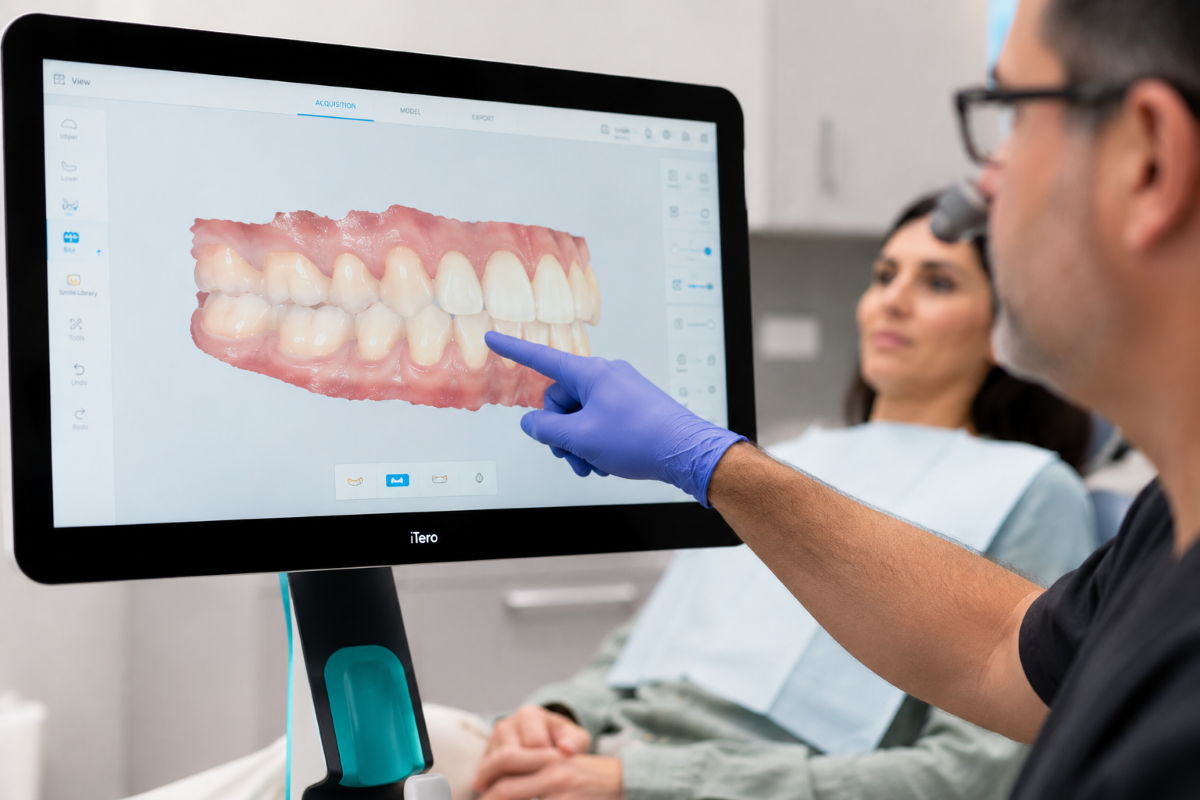
Invisalign can correct many mild to moderate overbites by gradually repositioning the upper and lower teeth into better alignment. It is not effective for severe skeletal cases caused by jaw structure, which may need referral beyond aligners alone. A clinical exam at Guelph Village Dental determines which category your bite falls into.
Fast Facts - Overbite Correction at a Glance
- An overbite is when the upper front teeth extend noticeably over the lower front teeth
- Mild to moderate dental cases often respond well to invisalign
- Severe or skeletal cases, caused by jaw bone structure rather than tooth position, may need referral beyond aligners alone
- Invisalign overbite before and after results vary widely depending on starting bite severity
- Your dentist will assess X-rays and bite alignment before recommending treatment
Patients often assume a deep bite automatically means metal braces and possibly headgear, but that's not always the case anymore. Whether invisalign can actually fix overbite concerns depends on how severe the issue is and what's causing it.
Can Invisalign Fix an Overbite? Guelph Dentist Explains
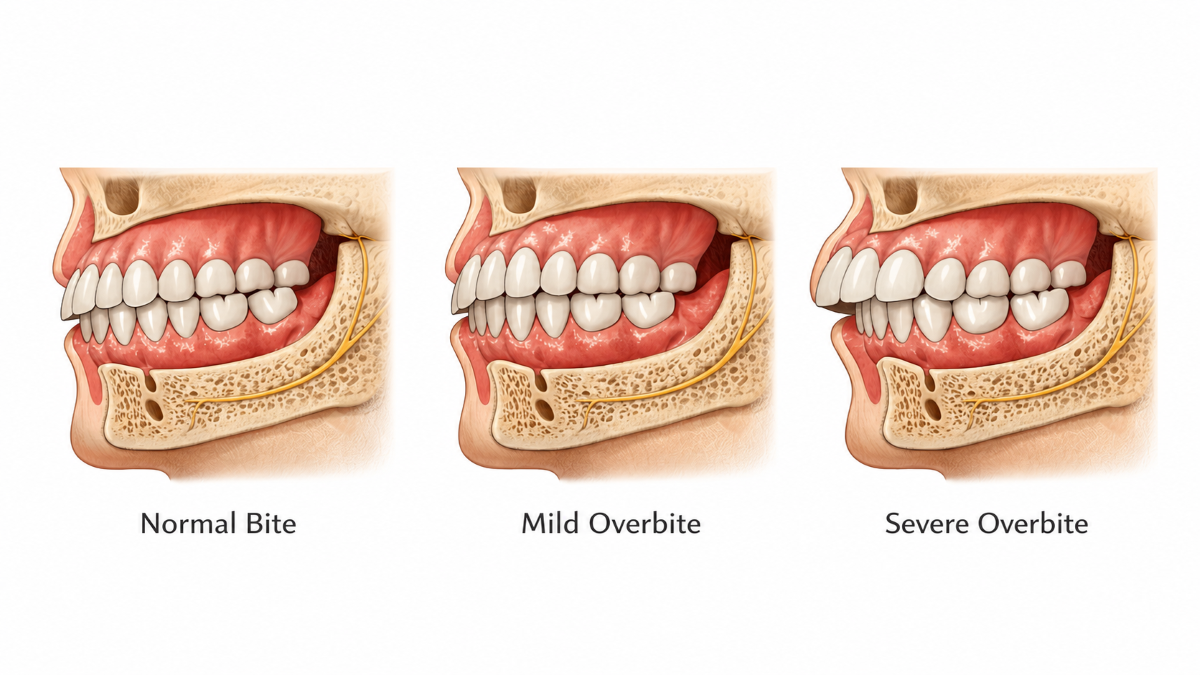
An overbite happens when the upper front teeth sit too far forward over the lower teeth when the jaw is closed. Some overlap is completely normal, most people have a small, healthy amount of it. It becomes a concern when the overlap is pronounced enough to affect chewing, speech, jaw comfort, or the appearance of your smile.
At Guelph Village Dental, patients regularly ask whether invisalign can address this without traditional braces for overbite correction. The honest answer is: it depends on the type and severity of the bite issue, which is why a clinical exam always comes first.
Dental Overbite vs. Skeletal Overbite
This distinction matters more than almost anything else in the conversation.
A dental overbite happens when the position of the teeth themselves, not the underlying jawbone causes the overlap. This type responds well to clear aligners for overbite treatment in many cases, since aligners can gradually reposition the teeth without needing to alter jaw structure.
A skeletal version, by contrast, is caused by a mismatch in the size or position of the upper and lower jawbones. This type is harder to correct with aligners or braces alone and sometimes requires orthodontic appliances, jaw growth guidance in younger patients, or in adult cases, a referral for surgical evaluation.
How We Diagnose Which Type You Have
A visual look in the mirror can't tell you which category your bite falls into, that takes a clinical exam. At Guelph Village Dental, your dentist will typically:
- Take digital X-rays and photographs to assess how the jaw and teeth line up
- Evaluate whether the front teeth, the jawbone, or both are contributing to the overlap
- Check for related signs like jaw clicking, uneven wear, or gum recession
- Review your bite history, including any previous orthodontic treatment
This assessment is what separates a realistic treatment recommendation from guesswork, and it's the same reason the Canadian Dental Association advises that any orthodontic plan be built on a proper clinical and radiographic evaluation rather than appearance alone.
When Invisalign Can Fix an Overbite
For many patients, especially those with mild to moderate dental cases, invisalign is a realistic and effective option. During your consultation, your dentist evaluates:
- How far the upper teeth extend past the lower teeth
- Whether the issue originates from tooth position or jaw structure
- The health of your gums and any prior dental work
- Whether other issues, like crowding or gaps, are present alongside it
If your case is a good fit, aligners apply steady, calculated pressure over several months to bring your bite into better alignment, the same underlying principle used to fix overbite issues with traditional orthodontics, just delivered through removable trays instead of fixed brackets.
When Invisalign Is Not Enough
Not every case is a candidate for aligners alone. Severe jaw overbite situations involving significant skeletal discrepancy typically need a more comprehensive treatment plan. Signs that a case may fall outside typical aligner scope include:
- A very pronounced gap between the upper and lower front teeth when biting down
- Jaw pain, clicking, or difficulty closing the mouth comfortably
- A visible profile imbalance between the upper and lower jaw
- A history of previous orthodontic relapse involving skeletal factors
In these situations, your dentist may recommend traditional orthodontics, an evaluation with an orthodontic specialist, or in some adult cases, a referral for surgical consultation. This isn't a failure of the aligner technology, it's simply outside what any removable system, on its own, is designed to correct.
What Treatment Looks Like Step by Step
If your dentist confirms you're a good candidate, treatment generally follows this path:
- Digital scanning and photographs to map your current bite
- A custom treatment plan showing the projected movement of your teeth, including simulated invisalign overbite before and after results
- A series of custom aligner trays, each worn for one to two weeks
- Regular check-in visits so your dentist can confirm the bite is tracking as planned
- Refinement aligners if additional movement is needed to finish the correction
- A retention plan to help hold the corrected bite in place long-term
What Results Look Like
Realistic correction with invisalign is gradual, you won't see dramatic change after the first few weeks. Most patients notice their bite starting to feel different around the midpoint of treatment, with the more visible overbite smile changes becoming apparent in the final third of the aligner series.
It's worth setting expectations early: aligners move teeth predictably, but the exact pace and outcome vary by starting severity, age, and how consistently the trays are worn. Our guide on the full Invisalign treatment timeline explains what affects that pace in more detail.
What This Means for Your Overall Oral Health
Left unaddressed, this condition isn't just a cosmetic matter. It can contribute to uneven wear on the front teeth, jaw muscle strain, and in some cases increased risk of gum recession on the lower front teeth from excessive contact. Addressing it whether with aligners or another orthodontic approach is as much about long-term function as it is about your overbite smile appearance.
Some patients also notice secondary effects like difficulty biting into certain foods comfortably, or a tendency to breathe through the mouth at night, which is worth mentioning to your dentist during your exam even if it seems unrelated.
What This Costs and How Long It Takes
Every treatment plan is priced individually based on how much correction is needed, so a mild dental case and a more involved one aren't priced or scheduled the same way. Our guide on Invisalign cost and financing walks through what typically drives that estimate, and our comparison of Invisalign vs. traditional braces covers how the two options stack up if your case turns out to need a fixed-appliance approach instead.
Frequently Asked Questions About Invisalign and Overbites
Ready to Find Out If Invisalign Can Fix Your Overbite?
Still not sure whether your bite needs aligners, braces, or a referral for something more involved?
- Your dentist takes X-rays and photographs to confirm whether your overbite is dental or skeletal before recommending anything
- Invisalign treatment is monitored in person the whole way through, with refinements added if your bite needs extra correction
- You'll get an honest answer about what's realistic for your specific case, not a one-size-fits-all recommendation
Call us to book a consultation with Dr. Sherief Mohamed or Dr. Sarah and find out what your bite actually needs.
Ready to prioritize your total wellness?
Book a comprehensive oral health assessment with our friendly team today.
 Troy Newton
 Ashley Leanne
 F. Da Silva
 Carol and Jess Mott