
Dentures in Guelph | Guelph Village Dental
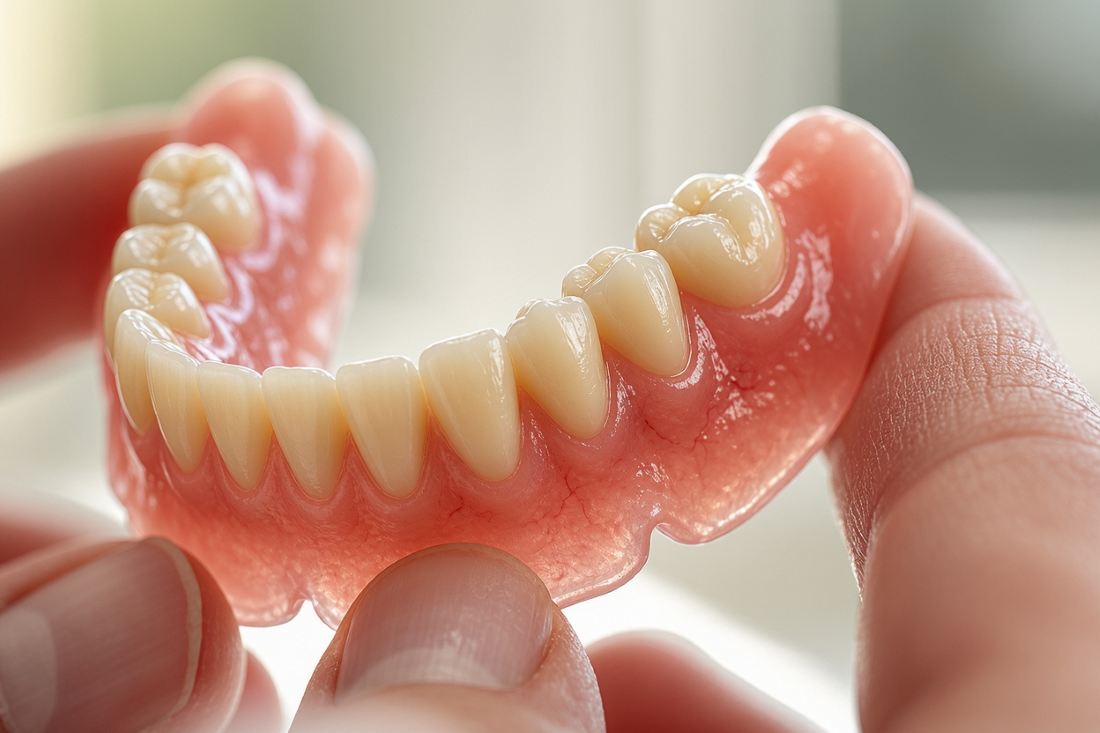
Dentures are removable dental appliances used to replace multiple or all missing teeth, restoring chewing function, speech clarity, and facial support. They are custom-fitted to each patient and available as full dentures, partial dentures, flexible partial dentures, and implant-supported designs. Type and fit are assessed individually based on the number of missing teeth, jaw structure, and patient goals.
Denture Options Available at Guelph Village Dental
Patients considering dentures Guelph treatment at Guelph Village Dental are assessed individually, with the type recommended based on how many teeth remain, oral health, and personal lifestyle and stability goals.
- Partial dentures for patients who still have some natural teeth that can provide support and retention
- Full dentures for patients missing all teeth in an upper or lower arch, or both
- Flexible partial dentures made from pliable resin for comfort without metal clasps
- Implant-supported dentures for patients who need significantly greater stability and retention
- Follow-up adjustment visits included to refine the fit as gum tissue adapts after placement
What Is the Difference Between Partial and Full Dentures?
Partial dentures are designed for patients who still have some natural teeth remaining. The remaining teeth act as anchors, and the denture fills the gaps created by missing teeth. Traditional partial dentures use an acrylic or metal frame, while flexible partial dentures use a pliable resin material that does not require metal clasps.
Full dentures replace all of the teeth in an upper arch, a lower arch, or both. They rest directly on the gum ridge. Full dentures are recommended when no natural teeth remain to provide support, and they rely on the fit of the denture against the gum tissue for stability.
| Feature | Partial Dentures | Full Dentures |
|---|---|---|
| Who it is for | Patients with some remaining natural teeth | Patients with no remaining teeth in the arch |
| Support and retention | Anchored by remaining natural teeth | Rests on gum ridge; relies on fit and adhesion |
| Preserves natural teeth | Yes, remaining teeth kept in place | Not applicable, all teeth absent |
| Types available | Acrylic, metal-frame, or flexible partial | Conventional or immediate placement |
| Stability | Supported by natural teeth | May feel less stable than fixed options |
| Implant-supported option | Partial implant-retained available | Full implant-supported overdenture available |
For patients who want a fixed alternative to removable dentures, information about dental implants is available on the dental implants (/services/dental-implants-guelph) page. Guelph Village Dental explains all options before any treatment is recommended.
Types of Dentures at Guelph Village Dental
Guelph Village Dental offers four denture options for dentures Guelph patients. The recommendation is based on clinical assessment, including the number of missing teeth, bone ridge condition, and patient goals for comfort and stability.
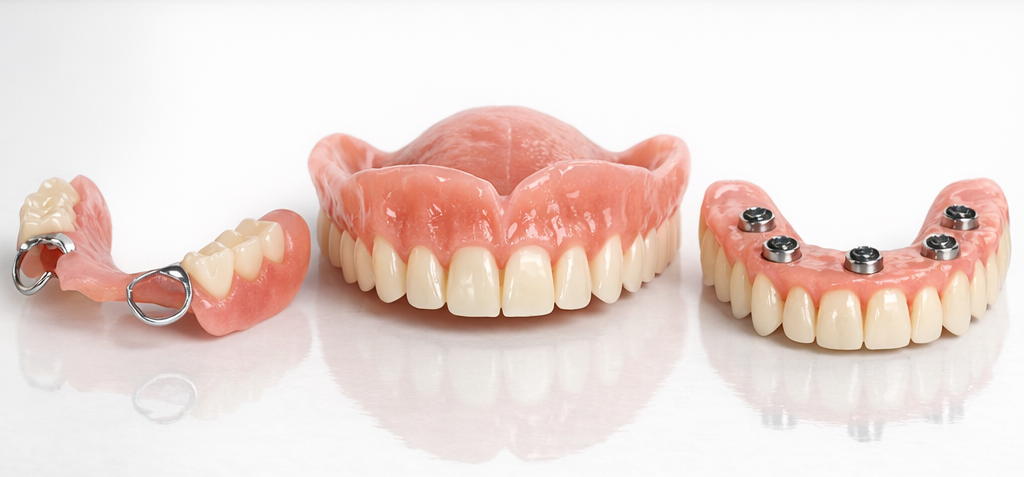
- Acrylic and metal-frame partial dentures — the standard partial design, using existing teeth for support with a framework that clips in place
- Flexible partial dentures — made from pliable resin; no metal clasps; lighter and more comfortable for some patients
- Conventional full dentures — placed after the gum tissue has healed following tooth removal; custom-fitted to the gum ridge
- Implant-supported dentures — snap onto dental implants placed in the jawbone, providing significantly improved stability compared to conventional removable dentures
Modern materials and fabrication techniques are used across all denture types. The best option for your situation is determined only after a clinical assessment and discussion of your goals.
What to Expect When Getting Dentures: Process and Adjustment
The dentures Guelph process begins with detailed impressions and a bite assessment. For patients undergoing extractions before dentures, the timing of placement, whether conventional after healing or immediate at time of extraction, is discussed in advance.
An adjustment period is expected. Some patients find it takes a few weeks for speech and eating to feel natural as the tongue, cheek muscles, and gum tissue adapt to the appliance. Guelph Village Dental provides guidance on eating, speaking, and use of denture adhesives when appropriate. Follow-up visits are scheduled to adjust the fit as the gum tissue and underlying bone change during the healing phase. According to the Canadian Dental Association, removable dentures typically require relining, adjusting, or replacement over time as the jawbone changes shape, and regular dental visits support long-term comfort and function.
How Much Do Dentures Cost in Guelph?
Denture Cost in Guelph: What Affects Pricing
Dentures cost at Guelph Village Dental varies by type, whether partial dentures, full dentures, flexible, or implant-supported, and the complexity of the case. Final pricing varies based on your individual clinical needs. Insurance coverage is reviewed when applicable. Long-term maintenance and the expected replacement or relining schedule are also explained at your consultation so you can plan the full investment accurately.
FAQs About Dentures
What are dentures and who are they recommended for?
What is the difference between partial and full dentures?
Do I have to go without teeth while waiting for dentures?
Can I eat normally with dentures?
Is it cheaper to get dentures or dental implants?
How much do dentures cost in Guelph?
How do I care for and clean my dentures?
What are the downsides or limitations of dentures?
Book a Denture Consultation in Guelph
Finding the right dentures Guelph fit starts with a thorough assessment. Guelph Village Dental evaluates your oral health, bone structure, and goals before recommending a denture type, and all options including fixed alternatives near you in Guelph are explained before any decision is made.
- Full, partial, flexible, and implant-supported denture options assessed and compared at your consultation
- Cost, insurance review, and long-term maintenance expectations discussed before treatment begins
Contact Guelph Village Dental to book your denture assessment. Guelph Village Dental accepts the Canadian Dental Care Plan (CDCP). Coverage eligibility is reviewed before treatment begins.
 Troy Newton
 Ashley Leanne
 F. Da Silva
 Carol and Jess Mott