
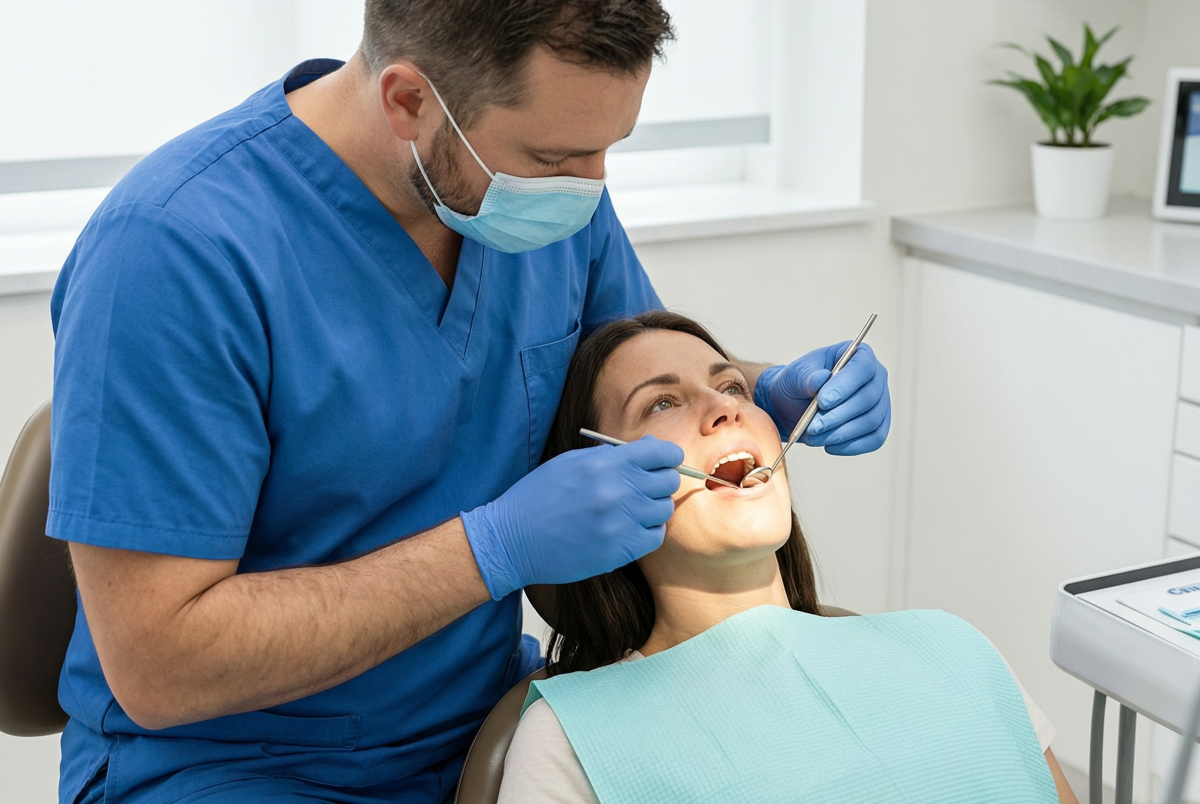
Oral cancer screening is a preventive dental examination used to detect abnormal tissue in the mouth, tongue, throat, and surrounding structures before symptoms develop. It typically involves a visual inspection and gentle palpation of the oral tissues and neck, along with a review of the patient's health history. Early detection significantly improves treatment outcomes.
What to Expect from Your Oral Cancer Screening
- Part of your routine dental exam: Screening is often performed during your regular checkup, with no separate appointment required.
- Visual and physical examination: Includes a thorough visual inspection of your mouth, tongue, and throat, along with gentle palpation of oral tissues and the neck.
- Recommended for adults of all ages: Frequency is adjusted based on your individual risk profile, including tobacco and alcohol use.
- Screening aids used when appropriate: Additional screening aids may be used when appropriate to highlight tissue changes not visible to the naked eye.
- Clear findings and next steps: Results are explained to you immediately. If anything needs further evaluation, a referral is arranged.
- Early detection matters: Identifying abnormal tissue early supports better outcomes and a wider range of treatment options.
What Is Oral Cancer Screening?
Oral cancer screening is a preventive examination performed by a dentist to detect early changes in the tissue of your mouth, lips, tongue, and throat. The goal is to identify anything unusual before it develops into a more serious concern, while treatment options remain most effective.
Screening is typically included as part of a dental exam, meaning most patients receive it without realising it is happening. At Guelph Village Dental, findings are always explained clearly, and any concerns are followed up with the appropriate next steps.
Who Should Have an Oral Cancer Screening?
Oral cancer screening is recommended for adults of all ages as part of routine preventive care. Certain risk factors increase the importance of regular screening, including:
- Tobacco use in any form, including cigarettes, cigars, chewing tobacco, and vaping
- Regular or heavy alcohol use
- A personal or family history of oral cancer or other head and neck cancers
- Persistent sores, patches, or discomfort in the mouth that have not resolved on their own
The Canadian Cancer Society notes that the risk of oral cancer increases significantly after age 40, though cases in younger adults have been rising. Frequency of screening is adjusted based on your individual risk level.
How Is Oral Cancer Screening Performed?
The screening process at Guelph Village Dental involves several steps, all of which are gentle, non-invasive, and completed during your regular visit:
- Visual examination: The dentist carefully examines your lips, gums, cheeks, tongue, floor of the mouth, palate, and throat for any unusual colour changes, sores, or abnormal tissue.
- Physical palpation: Gentle pressure is applied to the soft tissues of the mouth and the lymph nodes of the neck to check for lumps, swelling, or anything that feels out of the ordinary.
- Patient history review: Any symptoms you have noticed, along with relevant medical and dental history, are reviewed as part of the assessment.
- Screening aids: When appropriate, additional screening tools may be used to highlight areas of concern not visible to the naked eye.
The entire process adds only a few minutes to your appointment. If anything unusual is identified, the findings are explained to you clearly and a referral is arranged when needed.
Are Oral Cancer Screenings Worth It?
Yes. Oral cancer, like most cancers, is significantly more treatable when found early. A screening takes only a few minutes and is typically included as part of your family dentistry or routine dental checkup, making it one of the most efficient preventive measures available in a dental setting.
The challenge with oral cancer is that early-stage abnormalities are often painless and invisible without a clinical examination. Patients rarely notice anything wrong until a concern has had time to progress. Regular screening removes that gap, giving you and your dental team the best chance of identifying a problem when it is easiest to address.
Where Does Oral Cancer Usually Start?
Oral cancer most commonly develops in the cells lining the mouth and throat. The areas most frequently affected include:
- The tongue, particularly the sides and underside
- The floor of the mouth, beneath the tongue
- The soft palate and the back of the throat
- The inner lining of the cheeks
- The gums, especially in patients who use tobacco
- The lips, most often the lower lip
Risk increases with age, particularly after 40, and is compounded by tobacco use, alcohol consumption, and certain viral infections. Knowing where to look is one reason a trained dental professional performs the screening rather than relying on self-examination alone.
What Are the Signs of Oral Cancer?
The warning signs of oral cancer can be subtle, particularly in early stages. Between dental visits, watch for:
- Persistent sores or ulcers that have not healed within two to three weeks
- Lumps, thickened tissue, or swelling in any part of the mouth, jaw, or neck
- Red or white patches on the gums, tongue, cheeks, or soft palate
- Difficulty swallowing or chewing, or a sensation that something is caught in the throat
- Ongoing numbness, tenderness, or discomfort in the mouth, face, or neck
- Changes in how your teeth fit together, which may indicate tissue changes beneath the surface
For the tongue specifically, early signs often include a persistent sore or patch that does not heal, a lump or thickening along the edge or underside, or unexplained pain when swallowing. None of these signs confirm cancer on their own, but any that persist beyond two weeks warrant a prompt dental assessment.
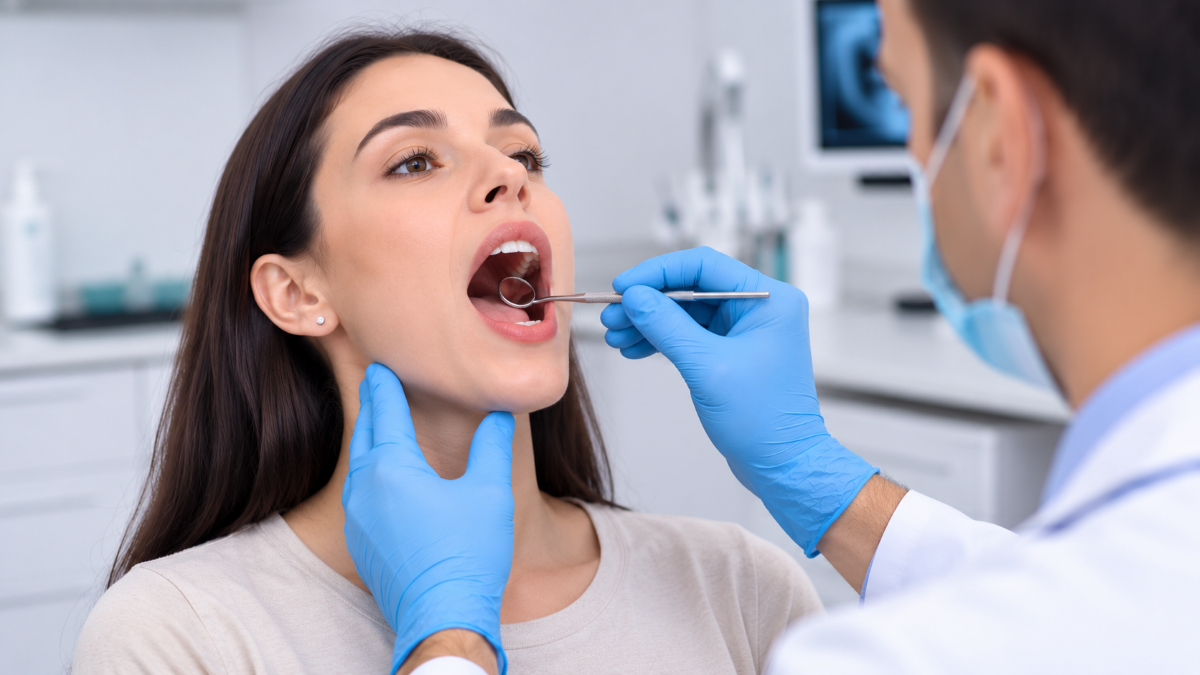
Oral Cancer Screening: With vs. Without
Many patients assume they will notice something wrong if it develops. Here is why routine oral cancer screening changes that picture:
| With Oral Cancer Screening | Without Screening | |
|---|---|---|
| Detection timing | Abnormal tissue identified early, before symptoms develop | Concerns typically noticed only after symptoms become visible or painful |
| Patient effort | A few minutes added to your routine dental visit | No impact at the time of the exam; risk of delayed diagnosis |
| Outcome potential | Higher likelihood of early-stage diagnosis and a wider range of treatment options | Later-stage diagnosis more likely when symptoms eventually prompt a visit |
| Next steps if concern found | Findings explained immediately; referral arranged as appropriate | Referral typically triggered only after patient-reported symptoms |
| Cost | Often included as part of your routine dental exam | No screening cost, but potential for greater treatment complexity later |
FAQs About Oral Cancer Screening in Guelph
Book Your Oral Cancer Screening in Guelph Today
This preventive exam is one of the simplest and most valuable steps you can take for your long-term health. At Guelph Village Dental, it is included as part of your regular dental exam, so you can protect yourself without adding an extra appointment to your schedule.
- No separate visit required: Screening is performed during your routine dental checkup.
- Clear, honest communication: Findings are explained to you at the appointment, and any next steps are discussed before you leave.
To book your dental exam and oral cancer screening in Guelph, contact Guelph Village Dental, our team looks forward to welcoming you.
Guelph Village Dental accepts the Canadian Dental Care Plan (CDCP). Oral cancer screening is included as part of comprehensive dental exams covered for eligible CDCP patients.
-------------------------------------------------------------------
 Troy Newton
 Ashley Leanne
 F. Da Silva
 Carol and Jess Mott